Valid Motor Vehicle Power of Attorney Form for Ohio
The Ohio Motor Vehicle Power of Attorney form is a crucial document for individuals who need to delegate authority regarding their motor vehicle transactions. This form allows one person, known as the principal, to appoint another individual, the agent, to act on their behalf in matters related to the ownership, registration, and transfer of motor vehicles. Whether you are selling a car, purchasing a new one, or simply need someone to handle the paperwork for you, this form streamlines the process. It ensures that the designated agent can perform necessary tasks such as signing titles, submitting documents to the Bureau of Motor Vehicles, and handling any related transactions without requiring the principal's physical presence. This legal tool not only provides convenience but also protects the interests of both parties involved. Understanding how to properly complete and execute this form is essential for ensuring that all legal requirements are met, allowing for a smooth transfer of authority and minimizing potential complications down the line.
Common mistakes
-
Not using the correct form. Ensure you have the Ohio Motor Vehicle Power of Attorney form specifically designed for this purpose.
-
Failing to include all necessary information. Both the principal and agent must provide their full names and addresses.
-
Not signing the form. The principal must sign the document in the designated area for the form to be valid.
-
Neglecting to date the form. A date is crucial as it indicates when the power of attorney becomes effective.
-
Overlooking notarization requirements. In Ohio, the form must be notarized to ensure its legality.
-
Using outdated information. Always check that all details, especially vehicle information, are current and accurate.
-
Not specifying the powers granted. Clearly outline what the agent is allowed to do regarding the vehicle.
-
Failing to provide a copy to the agent. The agent should have a copy of the signed form to present when needed.
-
Ignoring state-specific requirements. Be aware of any additional rules or regulations that may apply in Ohio.
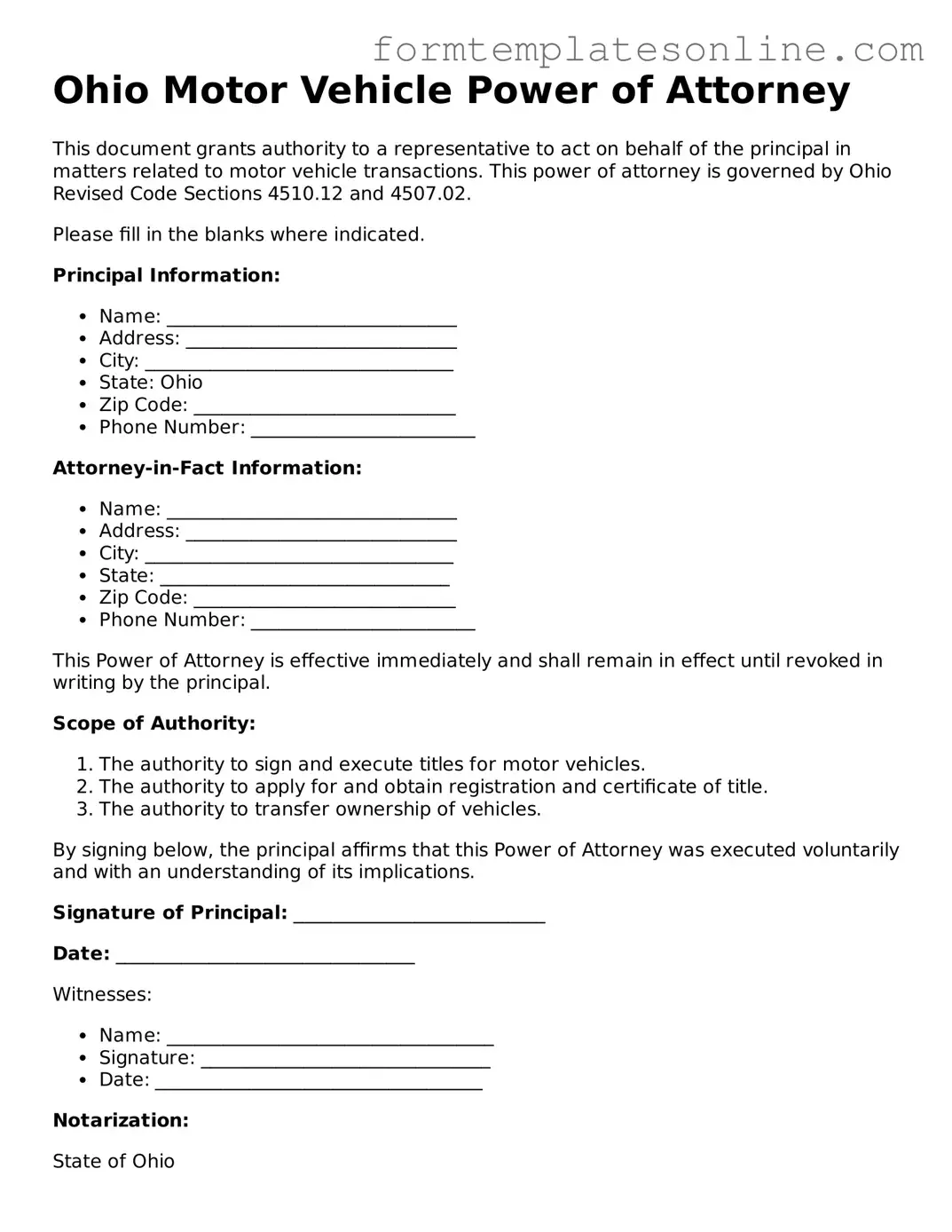
Example - Ohio Motor Vehicle Power of Attorney Form
Ohio Motor Vehicle Power of Attorney
This document grants authority to a representative to act on behalf of the principal in matters related to motor vehicle transactions. This power of attorney is governed by Ohio Revised Code Sections 4510.12 and 4507.02.
Please fill in the blanks where indicated.
Principal Information:
- Name: _______________________________
- Address: _____________________________
- City: _________________________________
- State: Ohio
- Zip Code: ____________________________
- Phone Number: ________________________
Attorney-in-Fact Information:
- Name: _______________________________
- Address: _____________________________
- City: _________________________________
- State: _______________________________
- Zip Code: ____________________________
- Phone Number: ________________________
This Power of Attorney is effective immediately and shall remain in effect until revoked in writing by the principal.
Scope of Authority:
- The authority to sign and execute titles for motor vehicles.
- The authority to apply for and obtain registration and certificate of title.
- The authority to transfer ownership of vehicles.
By signing below, the principal affirms that this Power of Attorney was executed voluntarily and with an understanding of its implications.
Signature of Principal: ___________________________
Date: ________________________________
Witnesses:
- Name: ___________________________________
- Signature: _______________________________
- Date: ___________________________________
Notarization:
State of Ohio
County of ____________________________
On this ______ day of ______________, 20____, before me, a Notary Public, personally appeared ________________________, the principal, and acknowledged the execution of this Power of Attorney.
Notary Signature: _____________________________
Notary Seal:
More About Ohio Motor Vehicle Power of Attorney
What is the Ohio Motor Vehicle Power of Attorney form?
The Ohio Motor Vehicle Power of Attorney form is a legal document that allows one person to authorize another person to act on their behalf regarding motor vehicle transactions. This could include buying, selling, or transferring ownership of a vehicle, as well as handling title issues and registration matters.
Who can use this form?
Any individual who owns a motor vehicle in Ohio can use this form. This includes private citizens, businesses, or organizations that need someone else to manage vehicle-related tasks for them. It’s particularly useful if the vehicle owner cannot be present to complete these tasks themselves.
What are the benefits of using a Power of Attorney for motor vehicle transactions?
Using a Power of Attorney simplifies the process of handling vehicle transactions. It saves time and effort, especially if the vehicle owner is unable to be physically present. Additionally, it ensures that someone trusted can make decisions and complete necessary paperwork on their behalf.
How do I fill out the form?
To fill out the Ohio Motor Vehicle Power of Attorney form, you need to provide basic information about both the vehicle owner and the designated agent. This includes names, addresses, and possibly the vehicle’s details, such as the VIN (Vehicle Identification Number). Make sure to sign and date the form as required.
Does the form need to be notarized?
Yes, the Ohio Motor Vehicle Power of Attorney form must be notarized to be valid. This means that a notary public must witness the signing of the document. This adds an extra layer of security and ensures that the identities of the parties involved are verified.
How long is the Power of Attorney valid?
The validity of the Power of Attorney can vary based on how it is written. Generally, it remains in effect until the vehicle owner revokes it, or until the specific task is completed. It is wise to specify an expiration date if you want it to be temporary.
Can I revoke the Power of Attorney once it is signed?
Yes, you can revoke the Power of Attorney at any time as long as you are mentally competent. To do this, you must provide written notice to the agent and any relevant parties, such as the DMV, to ensure that they are aware of the revocation.
What happens if the agent misuses the Power of Attorney?
If the agent misuses the Power of Attorney, the vehicle owner can take legal action against them. This could include seeking damages or pursuing criminal charges if applicable. It’s crucial to choose someone you trust to act as your agent.
Where can I obtain the Ohio Motor Vehicle Power of Attorney form?
You can obtain the Ohio Motor Vehicle Power of Attorney form from the Ohio Bureau of Motor Vehicles (BMV) website or by visiting a local BMV office. It may also be available through legal document services or local law offices.
Key takeaways
When considering the Ohio Motor Vehicle Power of Attorney form, it is essential to understand its implications and requirements. Here are some key takeaways:
- The form allows you to designate someone to handle specific motor vehicle transactions on your behalf, such as buying, selling, or registering a vehicle.
- It is important to clearly specify the powers you are granting to the agent to avoid any misunderstandings.
- The form must be signed in the presence of a notary public to ensure its validity.
- Once completed, provide a copy of the form to your designated agent and keep a copy for your records.
File Details
| Fact Name | Description |
|---|---|
| Purpose | The Ohio Motor Vehicle Power of Attorney form allows an individual to authorize someone else to handle vehicle-related transactions on their behalf. |
| Governing Law | This form is governed by the Ohio Revised Code, specifically sections related to powers of attorney and motor vehicle transactions. |
| Signatory Requirements | The form must be signed by the principal (the person granting authority) in the presence of a notary public. |
| Authorized Actions | The agent can perform actions such as registering a vehicle, transferring ownership, and obtaining title documents. |
| Agent's Role | The agent is the person designated to act on behalf of the principal. They must be trustworthy and responsible. |
| Duration | The power of attorney remains in effect until revoked by the principal or until a specified date, if included in the form. |
| Revocation | The principal can revoke the power of attorney at any time by providing written notice to the agent and any relevant parties. |
| Multiple Agents | It is possible to appoint more than one agent, but clear instructions should be provided on how they should act together. |
| Limitations | The form does not grant authority for all actions; it is limited to motor vehicle-related transactions only. |
| Filing | While the form does not need to be filed with the state, it should be kept in a safe place and presented as needed during transactions. |
Consider Some Other Motor Vehicle Power of Attorney Forms for US States
Power of Attorney Lasting - This legal document can facilitate smoother ownership transfers by allowing quick execution of necessary paperwork.
Texas Department of Motor Vehicle - Having a Power of Attorney for vehicle matters can help avoid the need for court intervention in emergencies.
How to Get Power of Attorney Florida - Having this form can save you time and trouble when dealing with vehicle transaction logistics.
To ensure a smooth transfer process, it is advisable to utilize a well-structured Georgia Motorcycle Bill of Sale. This document not only provides legal protection for both the buyer and seller but also contains all necessary details for a successful transaction. For those seeking a comprehensive template, OnlineLawDocs.com offers a useful resource.
Pa Dmv Forms - Carefully select a trustworthy individual before granting this authority.
Dos and Don'ts
When filling out the Ohio Motor Vehicle Power of Attorney form, it's essential to follow certain guidelines to ensure the process goes smoothly. Here’s a list of what you should and shouldn’t do:
- Do provide accurate and complete information about both the principal and the agent.
- Do sign and date the form in the designated areas.
- Do keep a copy of the completed form for your records.
- Do ensure the agent understands their responsibilities and authority.
- Don't leave any sections of the form blank unless instructed.
- Don't use outdated versions of the form; always check for the most current version.
- Don't forget to have the form notarized if required.
- Don't assume that verbal agreements are sufficient; everything should be documented.