Valid Non-compete Agreement Form for New York
In the competitive landscape of New York's job market, the Non-compete Agreement form serves as a crucial tool for employers and employees alike. This document outlines the terms under which an employee agrees not to engage in similar work with competing businesses for a specified period after leaving their current position. Key aspects of the form include the duration of the non-compete clause, the geographic scope of the restriction, and the specific activities that are prohibited. Additionally, the agreement must be reasonable in its limitations to be enforceable under New York law. Both parties should understand their rights and obligations as outlined in the form, ensuring that the agreement protects the employer's business interests while also considering the employee's ability to seek new opportunities. Clarity and fairness are essential, as they contribute to a healthy employer-employee relationship and help prevent potential disputes in the future.
Common mistakes
-
Failing to Understand the Terms: Many individuals do not take the time to fully comprehend the implications of the non-compete agreement. It is essential to understand what restrictions are being placed on future employment opportunities.
-
Not Specifying the Duration: A common mistake is leaving the duration of the non-compete period vague. Clearly defining how long the restrictions will last is crucial for both parties involved.
-
Ignoring Geographic Scope: Some individuals overlook the geographic limitations of the agreement. It is important to specify the areas where the non-compete applies to avoid ambiguity.
-
Neglecting to Review with Legal Counsel: Skipping the step of consulting with a legal expert can lead to misunderstandings. A lawyer can provide clarity and ensure that the agreement is fair and enforceable.
-
Overlooking Exceptions: Failing to identify any exceptions to the non-compete can create problems down the line. It is beneficial to include provisions that allow for specific circumstances where the restrictions do not apply.
-
Not Considering State Laws: Each state has different regulations regarding non-compete agreements. Ignoring New York's specific laws can result in an unenforceable agreement.
-
Rushing the Process: Many individuals fill out the form hastily without careful consideration. Taking the time to review and understand each section can prevent future complications.
Example - New York Non-compete Agreement Form
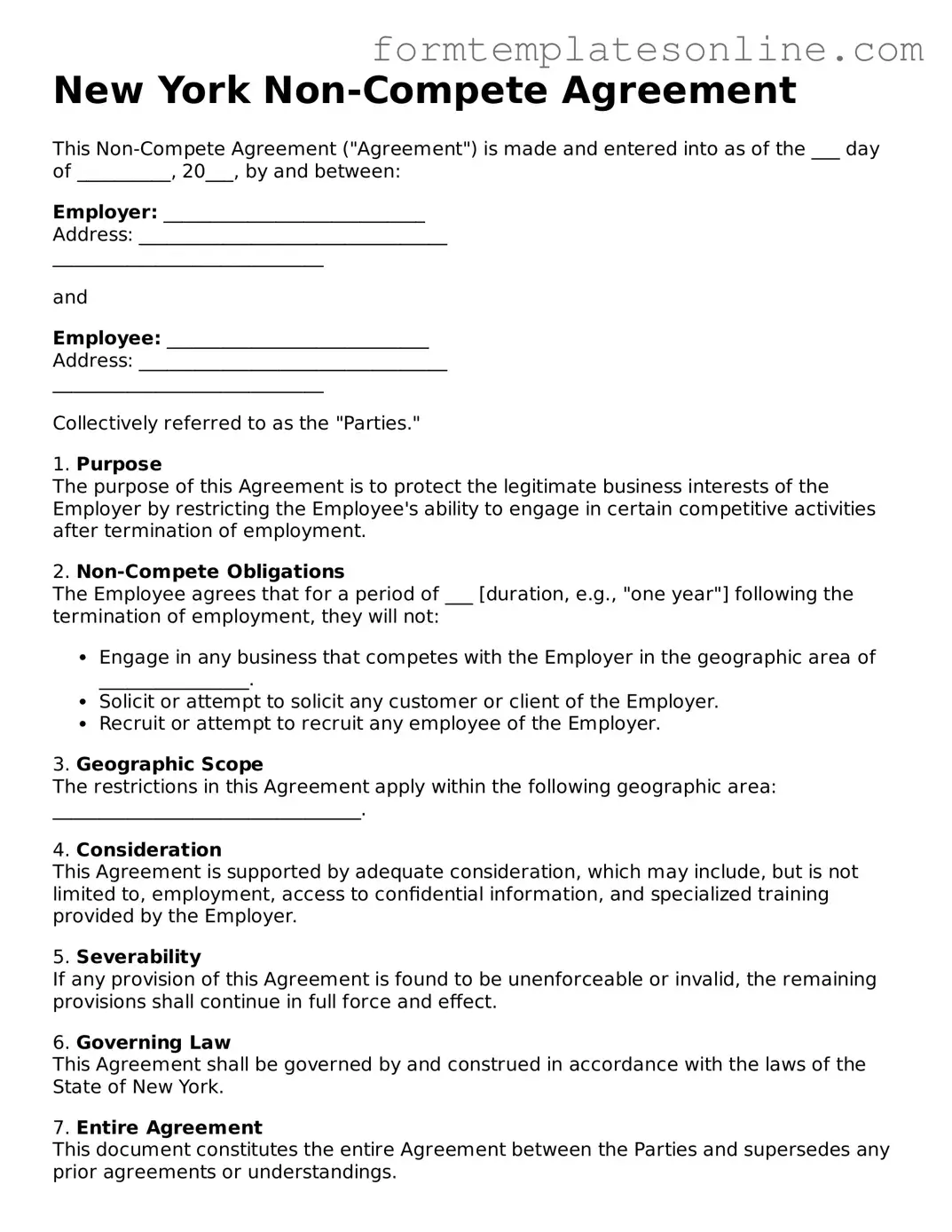
New York Non-Compete Agreement
This Non-Compete Agreement ("Agreement") is made and entered into as of the ___ day of __________, 20___, by and between:
Employer: ____________________________
Address: _________________________________
_____________________________
and
Employee: ____________________________
Address: _________________________________
_____________________________
Collectively referred to as the "Parties."
1. Purpose
The purpose of this Agreement is to protect the legitimate business interests of the Employer by restricting the Employee's ability to engage in certain competitive activities after termination of employment.
2. Non-Compete Obligations
The Employee agrees that for a period of ___ [duration, e.g., "one year"] following the termination of employment, they will not:
- Engage in any business that competes with the Employer in the geographic area of ________________.
- Solicit or attempt to solicit any customer or client of the Employer.
- Recruit or attempt to recruit any employee of the Employer.
3. Geographic Scope
The restrictions in this Agreement apply within the following geographic area: _________________________________.
4. Consideration
This Agreement is supported by adequate consideration, which may include, but is not limited to, employment, access to confidential information, and specialized training provided by the Employer.
5. Severability
If any provision of this Agreement is found to be unenforceable or invalid, the remaining provisions shall continue in full force and effect.
6. Governing Law
This Agreement shall be governed by and construed in accordance with the laws of the State of New York.
7. Entire Agreement
This document constitutes the entire Agreement between the Parties and supersedes any prior agreements or understandings.
IN WITNESS WHEREOF, the Parties have executed this Non-Compete Agreement as of the date first above written.
_____________________________
Employer Signature
Date: ________________________
_____________________________
Employee Signature
Date: ________________________
More About New York Non-compete Agreement
What is a Non-compete Agreement in New York?
A Non-compete Agreement is a legal contract between an employer and an employee. It restricts the employee from engaging in activities that compete with the employer's business for a specified period after leaving the company. In New York, these agreements must be reasonable in scope, duration, and geographic area to be enforceable. They aim to protect legitimate business interests, such as trade secrets and customer relationships.
Are Non-compete Agreements enforceable in New York?
Yes, Non-compete Agreements can be enforceable in New York, but they are subject to strict scrutiny. Courts will evaluate whether the agreement is necessary to protect the employer's legitimate interests, whether it imposes an undue hardship on the employee, and whether it is not injurious to the public. Therefore, an agreement that is overly broad or restrictive may not hold up in court.
What factors determine the reasonableness of a Non-compete Agreement?
Several factors contribute to the reasonableness of a Non-compete Agreement. These include the duration of the restriction, the geographic area covered, and the nature of the employee's work. Generally, shorter time frames and smaller geographic areas are more likely to be considered reasonable. Additionally, the specific industry and the employee's role within the company can influence the assessment of reasonableness.
Can I negotiate the terms of a Non-compete Agreement?
Yes, negotiating the terms of a Non-compete Agreement is not only possible but often advisable. Before signing, you should carefully review the agreement and discuss any concerns with your employer. You may request modifications to make the terms more favorable or clearer. It is essential to ensure that the agreement aligns with your career goals and does not unduly limit your future employment opportunities.
What should I do if I believe my Non-compete Agreement is unfair?
If you feel that your Non-compete Agreement is unfair or overly restrictive, consider seeking legal advice. An attorney with experience in employment law can help you understand your rights and options. They can also assist in negotiating the terms or challenging the agreement if necessary. Acting promptly is crucial, as there are often time limits for addressing these issues.
Key takeaways
When considering the New York Non-compete Agreement form, it is essential to understand its implications and requirements. Here are some key takeaways to keep in mind:
- Understand the Purpose: A non-compete agreement is designed to protect a business's interests by restricting employees from working with competitors for a specified period after leaving the company.
- Know the Duration: The agreement should clearly state the duration of the non-compete clause. In New York, courts typically favor reasonable time frames, often ranging from six months to two years.
- Define the Geographic Scope: Clearly outline the geographic area in which the non-compete applies. A well-defined scope helps ensure the agreement is enforceable and fair.
- Consider the Industry: The agreement should be tailored to the specific industry. This consideration helps to ensure that the restrictions are relevant and not overly broad.
- Seek Legal Guidance: Consulting with a legal professional can provide valuable insights into the enforceability of the agreement and help tailor it to meet specific business needs.
By keeping these takeaways in mind, you can better navigate the complexities of the New York Non-compete Agreement form and protect both your interests and those of your employees.
File Details
| Fact Name | Description |
|---|---|
| Governing Law | New York law governs non-compete agreements, specifically under the New York General Business Law. |
| Enforceability | Non-compete agreements in New York are enforceable only if they are reasonable in time, geographic scope, and purpose. |
| Consideration Requirement | For a non-compete agreement to be valid, there must be adequate consideration, such as employment or a promotion. |
| Employee Protections | New York courts often protect employees by closely scrutinizing non-compete clauses for fairness and necessity. |
| Duration Limitations | Typically, non-compete agreements should not exceed one to two years in duration to be considered reasonable. |
Consider Some Other Non-compete Agreement Forms for US States
Do Non Competes Hold Up in Florida - The timing of the non-compete's enforcement can play a significant role in how it is perceived and followed.
Filing the IRS 2553 form is essential for small businesses looking to maximize their tax benefits by electing S corporation status. By doing so, they can pass through income and losses to shareholders, enhancing their tax flexibility. For further details on the process and requirements, visit OnlineLawDocs.com.
Are You Subject to a Non-compete, Non-solicitation or Other Similar Post-employment Obligation? - A well-drafted Non-Compete Agreement can minimize potential legal conflicts after employment ends.
Atlanta Non-compete Lawyer - Prior to signing, employees may consult legal counsel for clarity on implications.
Are Non-competes Enforceable in California - An employee’s investment in training or skills must be weighed against the restrictions imposed.
Dos and Don'ts
When filling out the New York Non-compete Agreement form, it is important to approach the process with care. Here are some guidelines to follow:
- Do read the entire agreement thoroughly before signing.
- Do ensure that all personal information is accurate and up to date.
- Do consult with a legal professional if you have any questions or concerns.
- Do keep a copy of the signed agreement for your records.
- Don't rush through the form; take your time to understand each clause.
- Don't sign the agreement if you do not agree with its terms.
- Don't overlook any deadlines for submitting the form.
- Don't share the agreement with unauthorized individuals.